How Expert Gutter Cleaning in Hackettstown Prevents Overflow Issues
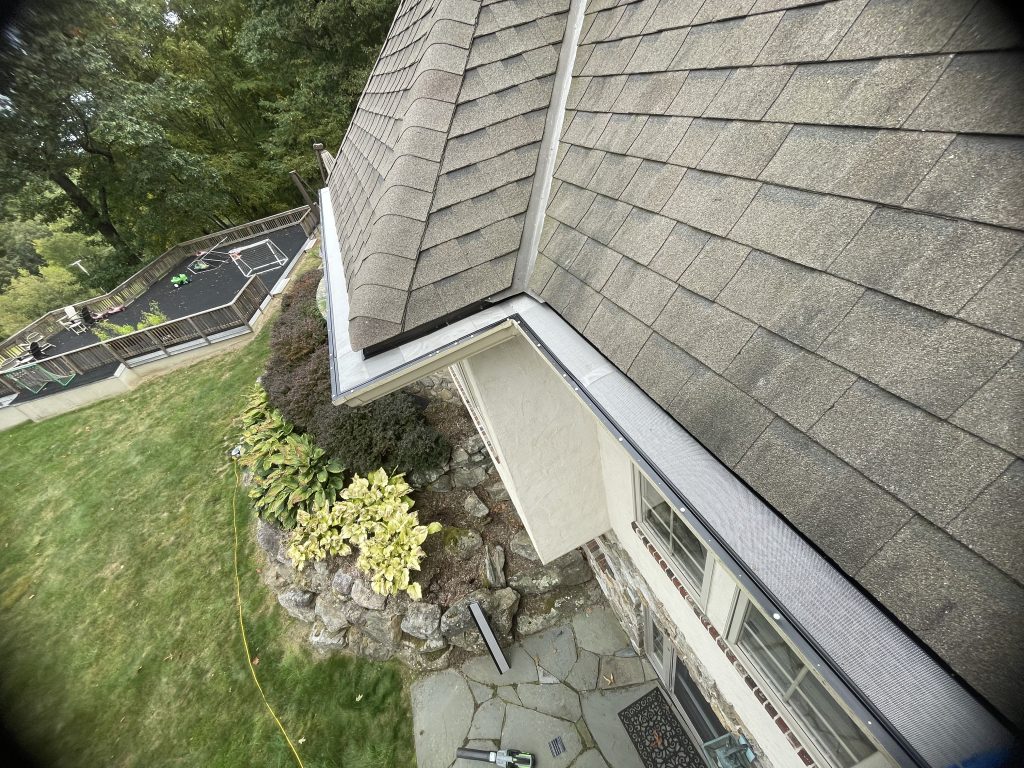
Gutter overflow rarely starts as a dramatic problem. Most of the time, it begins with a slow buildup that homeowners barely notice. A few maple leaves settle in a trough in October. Pine needles collect near a downspout in winter. Grit from asphalt shingles forms a dark sludge along the bottom. Then a hard spring rain hits Hackettstown, and suddenly water is pouring over the front edge of the gutter, dripping behind the fascia, splashing onto walkways, and soaking the mulch line around the foundation.
That sequence is common because gutters do a deceptively simple job. They catch a large volume of roof runoff and move it away from the house quickly. When they stay clear, they are almost invisible. When they clog, the damage tends to spread beyond the gutter itself. Overflow can stain siding, loosen soffits, rot trim, erode landscaping, and create moisture problems that cost far more than a routine service call.
Homeowners often assume overflow means the gutters are too small or the storm was unusually severe. Sometimes that is true. More often, the real issue is maintenance, and more specifically, the difference between basic debris removal and expert gutter cleaning. In a place like Hackettstown, where seasonal leaf drop, windblown debris, freezing temperatures, and heavy rain all play a role, professional cleaning is not just about making gutters look tidy. It is about restoring full water flow, spotting weak points early, and preventing the chain reaction that starts with one blocked section.
Overflow is usually a symptom, not the root problem
When water spills over the edge of a gutter, people naturally focus on the visible spill point. Yet the location of the overflow does not always reveal the actual blockage. A downspout clog twenty feet away can cause water to back up into a section that appears otherwise clear. A gutter with the wrong pitch can hold standing water until even a moderate storm pushes it over the lip. A hidden seam leak can mimic overflow by letting water run behind the system and down the wall.
That is why expert service matters. A trained crew does not simply scoop out leaves and move on. They read the system. They look at how water enters from roof valleys, how quickly it should exit through downspouts, whether hangers are pulling loose, and whether any part of the run is holding debris because the slope is off by a small but important margin.
On many homes, the worst trouble spots are predictable. Inside corners collect heavy debris because rooflines funnel material there. Areas beneath overhanging oak and maple branches fill fast in fall. Sections near second story valleys take the brunt of runoff during hard storms. These are details experienced technicians learn to recognize at a glance, and those details make the difference between a gutter that survives the next rain and one that spills over again within weeks.
What makes Hackettstown gutters work harder
Local conditions matter. Gutters on a home in a dry, low tree environment face a different set of demands than gutters in Warren County. Hackettstown properties often deal with a mix of mature trees, seasonal storms, snowmelt, and periods of freeze thaw weather. That combination creates a very specific pattern of wear.
Leaves alone are not the main problem. Dry leaves can be removed quickly. The trouble comes when those leaves break down and combine with roof grit, seed pods, twigs, and dirt washed off shingles. That mix forms a heavy, wet mass that settles near outlets and hardens over time. In late fall, a gutter may still seem to drain, just more slowly. By winter, trapped water can freeze around the clog, adding weight and stressing brackets. By spring, the next downpour finds a system with less capacity and weaker support.
Hackettstown also sees enough weather variation that one neglected season can carry consequences into the next. A clogged gutter in November does not stay a November issue. It can become an ice issue in January, a fascia issue in March, and a basement moisture issue in April. That is one reason homeowners searching for Gutter Cleaning Hackettstown services are often reacting to symptoms that began months earlier.
Why professional cleaning prevents more than leaf buildup
A homeowner with a ladder and gloves can remove visible debris from a low, straight section of gutter. That does help, but it only solves part of the problem. Overflow prevention requires a more complete approach.
First, professionals clear the entire channel, not just the sections that are easy to reach. Long runs, upper stories, awkward rooflines, and downspout transitions tend to hold the most troublesome material because they are least likely to be cleaned thoroughly during a quick do it yourself effort. A partly cleared system often drains just enough to seem fixed, until the next heavier rain exposes what was left behind.
Second, professionals flush the system to test actual water movement. This step matters because dry gutters can be misleading. A downspout may look open from above yet still contain a compacted blockage several feet down. During a flush, technicians can see whether water exits cleanly, backs up, leaks at joints, or pools in low spots.
Third, a good cleaning service checks the hardware. Overflow does not always come from debris alone. If spikes are loosening, hidden hangers are bent, or fascia boards are softening, the gutter can tilt outward under the weight of water. That causes spillover even when the channel is relatively clean.
Here is where expertise pays off. The value is not only in removing what is there today. It is in noticing what will cause tomorrow’s overflow.
The places where overflow causes the most damage
The damage from gutter overflow is often subtle at first, which is why it can continue longer than homeowners realize. Water is persistent. It finds seams, nail holes, and tiny gaps. If the gutter edge runs over repeatedly in the same area, the surrounding materials start to show it.
Common trouble areas include:
- Fascia and soffits, where repeated moisture can lead to paint failure, wood rot, and pest entry.
- Siding and masonry, which may show staining, mildew, or mineral streaking after repeated overflow.
- Foundation plantings and mulch beds, where concentrated runoff can carve trenches and expose roots.
- Walkways and entry areas, where splashing creates slippery surfaces and winter ice patches.
- Basement perimeters, where oversaturated soil can add hydrostatic pressure near foundation walls.
These problems do not all appear at once. A homeowner may first notice one peeling strip of paint or a flower bed that always seems washed out after storms. Later, the same area may show softened trim, puddling near the foundation, or water marks along a lower wall. The gutter above that area is often the starting point.
How experts clean for flow, not just appearance
The phrase “gutter cleaning” can sound simple, but high quality service is methodical. The objective is not cosmetic neatness. The objective is unrestricted drainage.
A thorough crew typically begins by removing all loose and compacted debris from the gutter body. That includes heavy muck in low areas, not just dry leaves on top. They then check outlet openings, where clogs frequently form at the transition into the downspout. Next comes a flush to confirm that water moves at the right speed and exits where it should.
If a downspout is slow, professionals use appropriate tools to clear it fully. In some cases that means hand removal from the bottom elbow. In others, it may involve flushing from the top and bottom until the line runs clear. The point is not force for its own sake. Too much pressure in the wrong place can separate joints or dislodge weak sections, so experience matters.
After water flow is restored, the best technicians look at the shape and support of the system itself. Is there a slight belly holding water in the middle of a long run? Is one corner pulling away from the fascia? Is the splash block missing, https://griffinrtyi351.greyhavendaily.com/posts/gutter-cleaning-hackettstown-services-that-keep-water-away-from-your-home-2 causing discharged water to circle back toward the house? These are practical observations that prevent a cleaned gutter from becoming a problem gutter again.
I have seen homes where the owner insisted the gutters had been “cleaned recently,” and that was technically true. Leaves had been removed. But the downspout outlet was still half blocked with roofing granules, the front edge had a subtle dip from a loose hanger, and a seam leak was staining the siding. The system looked acceptable from the ground. Functionally, it was still failing.
The role of timing in overflow prevention
Timing matters almost as much as technique. In Hackettstown, a single annual cleaning may be enough for some homes, while others need attention more often. The difference usually comes down to tree cover, roof design, and how the house sits relative to wind patterns.
A home with few nearby trees and simple rooflines may do well with one major cleaning late in fall and a light check in spring. A house under dense tree canopy, especially with valleys that collect debris, may need service two or even three times a year. Pine needles are a special case because they accumulate differently than broad leaves. They mat together, lodge at outlets, and can slip beneath some guards.
There is no universal calendar that fits every property. That is why blanket advice often fails. Professional providers who know the local conditions can usually tell after one visit how quickly a particular home is likely to clog.
As a rule, overflow prevention works best when cleaning happens before the system reaches capacity. Waiting until water is already spilling defeats the point. It is cheaper and simpler to remove forming buildup than to deal with a packed downspout, detached gutter section, or rotted trim board.
Why DIY efforts often miss the real cause
There is nothing wrong with hands on homeowners, and for some single story sections, careful self maintenance can help. But there are three common reasons do it yourself cleaning falls short.
The first is incomplete access. Second story gutters, sections above porches, and runs over sloped ground are harder to reach safely and thoroughly. The areas most likely to be skipped are often the same areas most likely to overflow.
The second is partial clearing. Many people remove what they can see and stop there. That may improve drainage temporarily, but hidden clogs inside downspouts or outlet holes remain untouched. The next storm reveals the problem again.
The third is missed diagnostics. A homeowner focused on debris removal may not notice that the gutter pitch is off by half an inch over a long run, or that a hanger has pulled away enough to create a low spot. These are small issues with large consequences.
There is also the safety factor, which should not be dismissed. Ladder work around wet leaves, uneven ground, and roof edges sends plenty of people to urgent care every year. The cost comparison changes quickly if one afternoon project ends with a sprained ankle or damaged gutter section.
Signs that a gutter needs expert attention soon
Some warning signs are obvious, such as water sheeting over the gutter edge during rain. Others are easier to overlook. If you see any of the following, the system is already asking for help.
- Plants or weeds growing in the gutter.
- Water marks or black streaks on fascia boards and siding.
- Sagging sections or visible gaps between gutter and roofline.
- Puddles near the foundation after moderate rain.
- Drips from joints long after rain has stopped.
Each of these points to either blocked flow, trapped standing water, or failing support. Any one of them can lead to overflow under the right weather conditions.
Gutter guards help, but they do not eliminate cleaning
One of the more persistent myths is that gutter guards make maintenance unnecessary. They can reduce the amount of large debris entering the system, and on the right home they can be worthwhile. But they do not eliminate the need for inspection and cleaning.
Fine debris still collects on top of some guard systems. Small particles can pass through and accumulate inside. Pine needles and seed pods can bridge over openings. In heavy storms, water can overshoot certain guard profiles if they are not matched well to the roof and rainfall pattern.
Expert cleaners understand these limitations. They know how to service guarded systems without damaging them, and they can tell when a guard is helping versus when it is masking an underlying pitch or drainage issue. Homeowners sometimes feel frustrated because they paid for guards and still experience overflow. Usually the answer is not that guards never work. It is that no cover system can compensate for a clogged downspout, poor installation, or a neglected inspection schedule.
The cost of routine service versus the cost of neglect
Home maintenance decisions usually come down to risk and value. Gutter cleaning is one of those tasks that feels easy to postpone because the benefit is preventive rather than dramatic. Yet the math tends to favor timely service.
A routine cleaning visit is predictable. Repairing water damaged fascia, replacing landscape washout, repainting stained siding, or addressing moisture intrusion near a basement wall is not. Even small carpentry repairs often exceed the cost of several years of maintenance. Once overflow has been severe enough to loosen fasteners or rot trim, the repair is no longer a cleaning issue. It becomes a construction issue.
That is especially important for older homes in and around Hackettstown, where original wood details and mature landscaping add charm but also increase vulnerability to uncontrolled runoff. Preserving those features usually costs less than replacing them.
Choosing a service that actually solves the problem
Not all providers approach the work with the same level of care. If a company treats gutter cleaning as a rushed add on, the result may be little more than a superficial debris sweep. Homeowners should look for a service that understands drainage as a whole system.
A solid provider will explain what they found, not just what they removed. They should be able to point out clogged outlets, weak hangers, seam concerns, or sections that are not pitching correctly. They should also be honest about trade offs. For example, a gutter may be clean but still undersized for a particularly large roof valley in a hard storm. In that case, cleaning helps, but layout changes may be worth discussing.
That kind of judgment is what separates true Gutter Cleaning Hackettstown specialists from crews who simply empty troughs and move on. The goal is not to sell unnecessary work. It is to understand how water behaves on your specific home and reduce the chance that it ends up where it should not.
A clean gutter protects much more than the gutter
The practical value of expert gutter cleaning is easy to miss because the payoff is mostly invisible. You do not see the soil that stayed in place, the fascia board that stayed dry, or the basement corner that never developed a moisture problem. You simply get a system that handles storms the way it should.
That is the point. Good gutter maintenance is quiet. Rain arrives, water enters the trough, flows through the downspouts, and exits away from the house without fanfare. No spill lines, no splashback, no surprise puddles by the foundation. In a climate with as much seasonal variation as Hackettstown, that reliability matters.
Overflow issues are rarely random. They are usually the result of blocked flow, poor timing, missed warning signs, or incomplete cleaning. Expert service addresses all four. It clears the debris you can see, the sludge you cannot, and the structural details that determine whether the next storm becomes a problem. For homeowners who want to avoid recurring water damage, that level of attention is not a luxury. It is basic protection for the home itself.
Just Gutters LLC
Address: 262 Main St, Hackettstown, NJ 07840
Phone number: +12013319454
FAQ About Gutter Cleaning Hackettstown
How much should a gutter clean cost?
Professional gutter cleaning typically costs between $163 and $333, with a national average of around $210 to $250 for a standard-sized home.
What months should you clean gutters?
You should clean your gutters twice a year—once in late autumn (November to December) and once in late spring (April to May).
Is it worth paying for gutter cleaning?
Yes, paying for gutter cleaning is worth it because it prevents thousands of dollars in water damage, roof leaks, and structural repairs.